
The Amenities Residents Actually Value
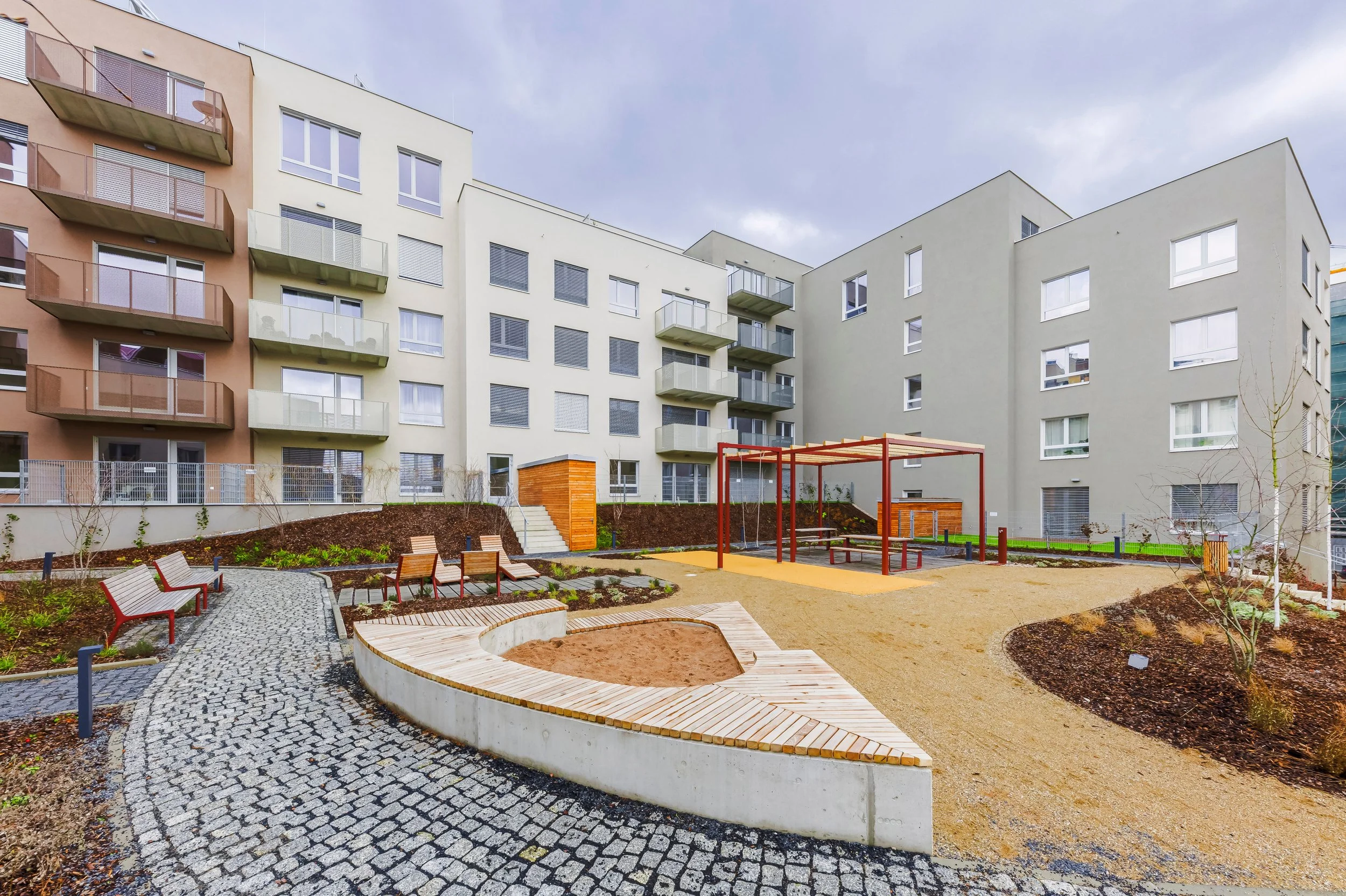
The best multifamily amenities are not always the most elaborate. Strong returns usually come from features that remove everyday friction, support the way residents actually live, and remain useful long after the tour is over.
Apartment amenities are often selected for their marketing appeal.
Pools sparkle in photographs. Clubhouses create an impressive first impression. Rooftop lounges, game rooms, coffee bars, and demonstration kitchens give leasing teams something memorable to show during a tour.
But an amenity that helps lease an apartment is not necessarily an amenity that helps retain the resident—and neither outcome guarantees a worthwhile financial return.
The most valuable amenities tend to do at least one of three things:
Expand the number of prospects willing to consider the property
Support rent, occupancy, or ancillary revenue
Make daily life convenient enough that residents are less motivated to leave
The best investments accomplish more than one.
Start with the fundamentals
Recent renter research consistently favors practical features over novelty.
In a 2026 Apartments.com renter survey, air conditioning and in-unit laundry were the two most frequently identified necessities. Off-street parking, dishwashers, private outdoor space, and on-site laundry followed. Apartments.com renter amenity survey
Zillow’s analysis of rental listings reached a similar conclusion. Listings mentioning off-street parking received substantially more daily saves and shares than comparable listings, while in-unit laundry also produced significantly stronger engagement. Zillow rental-feature analysis
These are not glamorous amenities. They are features residents use repeatedly.
That distinction matters. An amenity used twice a day has more opportunities to reinforce a resident’s satisfaction than one used twice a year.
1. In-unit laundry
In-unit laundry is among the strongest broad-market amenities because it removes a frequent and unavoidable inconvenience.
Residents do not need to reserve a machine, save coins or load money onto a laundry card, transport clothing through the property, wait for another cycle to finish, or worry about leaving belongings in a shared room.
Apartments.com reported that 64% of surveyed renters considered in-unit laundry essential in 2026. Zillow found that listings mentioning it received 76% more daily saves and 92% more daily shares than similar listings. Those figures measure stated demand and listing engagement—not guaranteed rent premiums—but they demonstrate how strongly the feature influences renter interest.
From an owner’s perspective, the return depends on installation feasibility.
Adding laundry hookups during construction or a major renovation may be an excellent long-term investment. Retrofitting an older building may require electrical, plumbing, ventilation, waterproofing, or space modifications that make the return less certain.
Where in-unit laundry is impractical, a well-maintained on-site laundry room can still create meaningful value. It should be clean, secure, well-lit, adequately sized, easy to pay for, and equipped with enough functioning machines to serve the property.
A neglected laundry room is not a neutral amenity. It is a recurring reminder of poor management.
2. Reliable air conditioning and climate control
Air conditioning was the most frequently identified essential amenity in the 2026 Apartments.com survey, selected by 65% of renters nationally. Demand varies significantly by climate, building type, and resident demographics, but increasingly hot summers are making dependable cooling important in more markets.
The quality of the system matters as much as its existence.
Residents value the ability to control the temperature of their homes without excessive noise, unpredictable utility bills, or repeated service problems. An aging system listed as an amenity but unable to maintain a comfortable temperature may become a maintenance burden and a source of dissatisfaction.
Energy-efficient heat pumps, effective insulation, weather sealing, ceiling fans, smart or programmable thermostats, and high-quality window coverings can improve comfort while helping control operating or resident-paid energy costs.
Comfort is not visually dramatic. It is also difficult for residents to ignore when it is missing.
3. Off-street parking
Parking is one of the clearest examples of an amenity whose value depends on location.
In a dense urban property near reliable public transportation, parking may be less important and extremely expensive to provide. In suburban, small-city, or car-dependent markets, it may be a deciding factor.
Apartments.com found that 42% of surveyed renters considered off-street parking or a garage essential. Zillow found particularly strong listing engagement when off-street parking was mentioned.
Parking may produce returns through:
Increased prospect demand
Monthly reserved-space or garage fees
Reduced resident frustration
Improved security and convenience
Greater differentiation in areas with limited street parking
Better accommodation of multi-vehicle households
Owners should assess parking as an operating system rather than simply an expanse of pavement. Striping, lighting, drainage, snow removal, enforcement, guest parking, accessible spaces, signage, and assigned-space records all affect its value.
A parking amenity that residents cannot reliably use may create more conflict than goodwill.
4. Fast, dependable internet
Reliable internet has become part of the functional infrastructure of an apartment.
Residents use it for work, school, entertainment, healthcare, communication, shopping, and access to property services. Speed matters, but so do reliability, provider choice, coverage, transparent pricing, and the ease of establishing service.
Owners may create value by:
Bringing modern broadband infrastructure to the property
Offering more than one provider where feasible
Ensuring strong connectivity in common areas
Providing accurate information about available service
Avoiding mandatory technology packages that provide poor value
Designing new buildings with future capacity in mind
Bulk internet can create ancillary revenue or negotiating leverage, but it can also generate dissatisfaction when residents are required to pay for a service they consider unreliable, overpriced, or inferior to alternatives.
The amenity is not “internet access” in the abstract.
The amenity is internet that works.
5. Pet-friendly policies and useful pet features
For many renters, permission to keep a pet matters more than the presence of a specialized pet amenity.
Zillow reported in 2025 that nearly six in ten renters had a pet and that almost half had passed on a property that did not allow one. Its analysis of more than 11 million listings found that pet-friendly rentals typically leased eight days faster and received more views, saves, and shares than rentals that did not permit pets. Zillow pet-friendly rental analysis
Allowing pets can expand the prospect pool, reduce vacancy exposure, support appropriate pet rent or fees where permitted, and encourage longer residency by removing a major reason a household might need to move.
High-value pet features may include:
Clearly designated relief areas
Convenient waste stations
Secure fencing where appropriate
Durable flooring
Outdoor washing stations
Reasonable rules that are consistently enforced
Straightforward pet registration
Convenient access to walking areas
An elaborate indoor pet spa may photograph well, but conveniently located waste stations and a clean relief area may deliver more daily value at a fraction of the cost.
Pet policies should also be clearly distinguished from legally required processes involving assistance animals. Those requests should be handled consistently and in accordance with applicable fair-housing requirements.
6. Package management
Package delivery has created a continuing operational challenge for multifamily properties.
A secure package room, locker system, or well-designed delivery process can benefit residents while reducing the time staff spend accepting, sorting, storing, locating, and investigating packages.
The right solution depends on delivery volume, property layout, staffing, accessibility, and vendor participation.
A package system should be:
Secure
Easy for residents to access
Large enough for realistic delivery volume
Able to accommodate oversized items
Convenient for delivery drivers
Supported when codes or notifications fail
Monitored for packages left too long
Available during hours that fit residents’ schedules
Owners should consider both direct and indirect returns. A package room may not produce a separate monthly premium, but it can reduce office interruptions, package disputes, storage problems, theft concerns, and resident frustration.
The operating savings may be as important as the leasing value.
7. Dishwashers, storage, and private outdoor space
Several in-unit features consistently rank above expensive shared amenities because residents use them as part of ordinary life.
Dishwashers
A dishwasher is an established expectation in many markets and was considered essential by 42% of respondents in the 2026 Apartments.com survey. The installation cost is generally more manageable than many large community amenities, particularly during unit renovation.
Storage
Useful storage can make a modestly sized apartment function much better. Linen closets, pantry space, coat closets, secure exterior storage, bicycle rooms, and rentable storage units may all create value.
Residents experience square footage through usability, not merely through a number in a listing.
Balconies, patios, and private outdoor space
Apartments.com found that 37% of surveyed renters considered a balcony, patio, or other private outdoor space essential. Demand was particularly strong among older renters.
Adding private outdoor space to an existing building may be structurally difficult or financially unrealistic. Where it already exists, however, maintaining it well and presenting it accurately can strengthen the property’s appeal.
These spaces need safe railings, appropriate drainage, understandable use rules, and prompt maintenance. A deteriorating balcony is not an amenity—it is a liability.
8. Smart locks and thermostats
Smart-home technology can create value when it solves a recognizable problem.
Rently’s 2025 smart-apartment survey found that 65% of respondents considered apartments more appealing when they offered smart-home technology, while 58% said they would prioritize smart features and lower rent over traditional amenities such as a pool or gym. Rently Smart Apartment Trends Report
For residents, useful smart features may offer:
Keyless entry
Remote temperature control
Energy savings
Easier access management
Leak or moisture alerts
Greater visibility into home security
For operators, potential benefits may include:
Easier lock changes between residents
Reduced key-management work
Support for self-guided tours
HVAC monitoring
Early detection of leaks or abnormal conditions
Lower energy use in vacant units
ROI depends heavily on the hardware, software fees, system reliability, integration, cybersecurity, and ongoing support.
A smart lock that regularly fails is worse than a dependable conventional lock. Technology should simplify the resident experience, not create a new reason to contact the office.
9. Fitness spaces—when sized for actual use
Fitness centers remain appealing in many market-rate communities, but their value is not universal.
Zillow’s 2024 renter research found that only 18% of recent renters considered a shared fitness center very or extremely important. Other practical features ranked considerably higher. Zillow renter housing trends
That does not mean fitness centers are poor investments. They may be valuable in properties where:
Nearby gym access is limited or expensive
The resident profile supports regular use
The space already exists
Equipment can be maintained economically
Access hours fit resident schedules
The amenity contributes to the property’s market position
A compact, well-designed fitness room with durable equipment may deliver better returns than an oversized facility filled with specialized machines residents rarely use.
Cleanliness, ventilation, lighting, security, and equipment maintenance influence satisfaction more than sheer size.
10. Flexible common space
Clubhouses and lounges can provide value, but rigid single-purpose rooms often become underused.
A flexible common area may serve as:
A resident lounge
A remote-work area
A small meeting space
A location for community events
A reservable private room
A waiting or gathering area
An extension of outdoor space
The strongest designs support several activities without requiring expensive daily staffing.
Before renovating a common area, owners should review actual access data, reservations, resident feedback, and observed use. A beautiful room that remains locked, closes before residents return from work, or requires a complicated reservation process is unlikely to support retention.
Access is part of the amenity.
The most valuable “amenity” may be good management
Physical features help attract prospects. Resident retention depends heavily on what happens after move-in.
AppFolio’s 2026 renter research found that residents satisfied with maintenance were substantially more likely to plan to renew or remain in their homes than dissatisfied residents. Satisfaction with communication showed a similarly strong relationship with renewal intentions and recommendations. AppFolio 2026 Renter Preferences Report
This suggests an important investment order.
Before building a new lounge or installing a novelty amenity, owners should determine whether residents can:
Submit maintenance requests easily
See the status of those requests
Receive timely repairs
Reach the office
Get accurate answers
Pay rent conveniently
Access clear account information
Receive advance notice of property activity
Trust that rules will be applied consistently
Use existing amenities safely and reliably
A property with excellent service and modest amenities may retain residents more successfully than a property with expensive features and poor daily operations.
Residents do not experience an amenity brochure. They experience the property.
Measure what residents actually use
Amenities should not disappear from management attention once construction is complete.
Operators should monitor:
Access or usage frequency
Unique resident users
Peak usage periods
Reservations and cancellations
Maintenance costs
Utility costs
Damage and replacement
Resident complaints
Prospect feedback
Renewal-survey responses
Rent performance compared with similar units or properties
Whether residents understand that the amenity exists
Low use does not always mean low value. Residents may appreciate having a gym available even if they use it occasionally. A package room provides value whenever a delivery arrives, not through long visits.
But consistently low use combined with high operating costs should prompt review.
The answer may be better communication, expanded access, redesigned space, different equipment, or removing an amenity that no longer justifies its cost.
Ask residents before deciding
Portfolio-wide trends are useful. Property-specific evidence is better.
Before making a substantial investment, operators should survey current residents, recent prospects, and people who declined to lease.
Ask:
Which proposed feature would you use?
How often would you use it?
Would it influence a renewal decision?
Would you pay a stated monthly amount for it?
Which existing amenity needs improvement?
Which inconvenience affects you most?
Which feature did you consider essential when choosing the property?
What does a competing property offer that this one does not?
Avoid asking only whether someone “likes” an amenity. Most people like additional features when no price or tradeoff is attached.
A more useful question is whether the resident would prefer the amenity if it increased monthly housing costs or replaced another planned improvement.
ROI lives in the tradeoff.
Practical amenities usually win
The amenities with the broadest appeal are not especially surprising:
A comfortable temperature
Convenient laundry
Dependable parking
Fast internet
A workable pet policy
Secure package delivery
Useful storage
Functional appliances
Safe outdoor space
Technology that reduces friction
Maintenance and communication residents can trust
These features support ordinary life.
That is precisely why they are valuable.
A novelty amenity may help a property stand out during a 30-minute tour. A practical amenity improves the resident’s experience every week for the duration of the lease.
The best amenity strategy is not to provide the longest list.
It is to invest in the features residents use, maintain them well, measure their performance, and resist spending money on spaces that exist primarily to look impressive in marketing photographs.
